Can Humanity Afford the Compute for AI?
The price of an answer can fall while the electricity bill grows. I want to know what we’re getting for it.
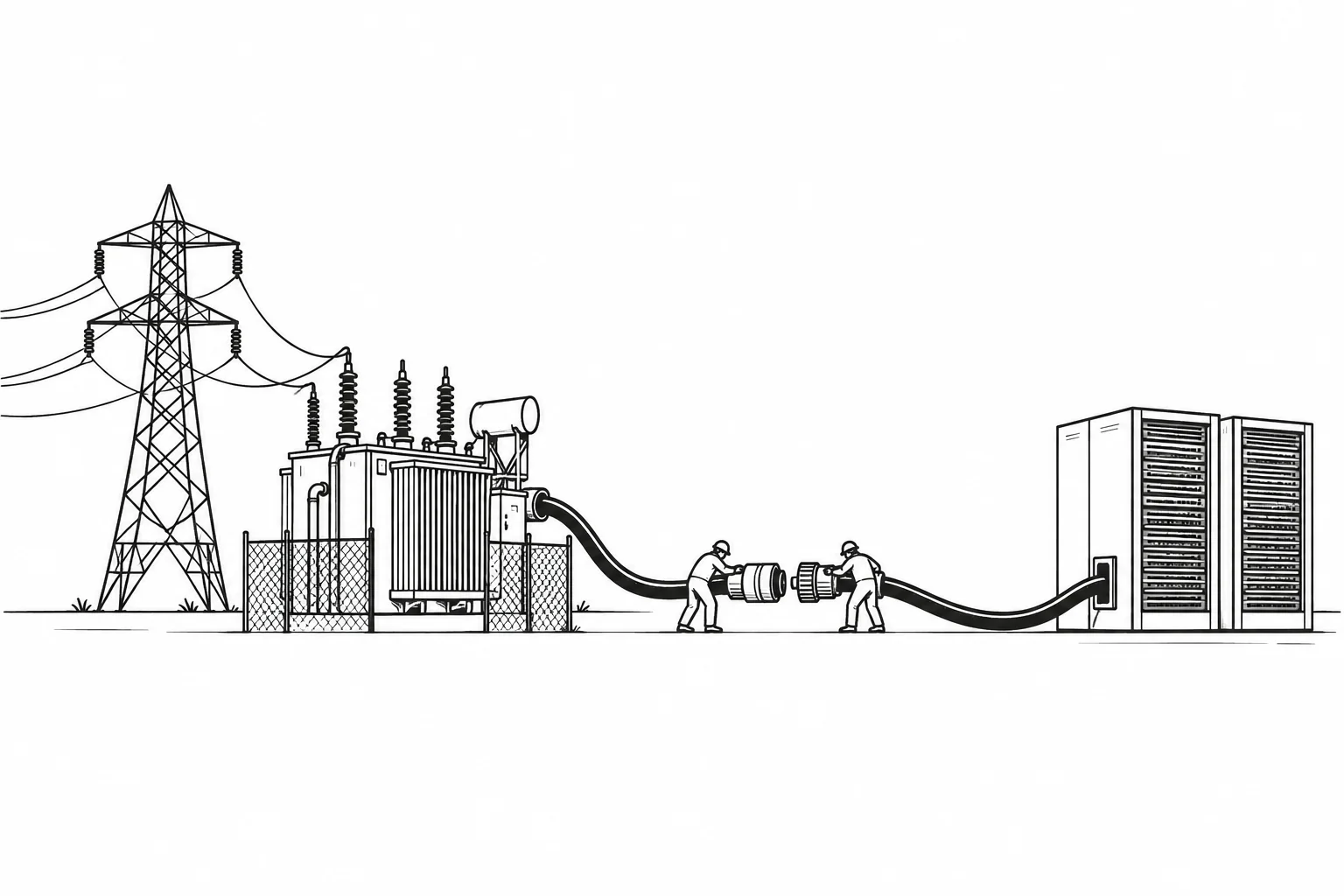
I find “the cloud” an increasingly strange name for something that needs so much electricity and plumbing. Follow an AI system far enough and you arrive at a transformer, a cooling installation, and someone waiting for a permit.
A company can afford the chips while the local grid struggles to accommodate them. The price of an answer can fall while the electricity bill grows. That’s what makes the question of whether we can afford AI more interesting than the price of a subscription.
I think we can afford much more useful AI. I’m less convinced that every proposed data centre deserves the infrastructure it asks for. I want to know what people will do with it, and who carries the costs that don’t appear on the developer’s invoice.
Cheaper answers, bigger bills
Making AI more efficient matters. A smaller model may do a particular job perfectly well. Better software can reduce wasted computation, and expensive models can be saved for requests that need them. The test is whether the cheaper system still does the job properly.
But cheaper computation gives us reasons to use more of it. An agent can turn one instruction into repeated searches, attempts at writing code, and checks on its own work. The number of messages I type tells me very little about how much work the system performs.
Imagine halving the electricity needed for a task, then doing that task three times as often. Total electricity use rises by half. Efficiency improved; the bill still grew.
I don’t see that as an argument against efficiency. If more researchers can run useful experiments within the same budget, that’s a good outcome. It does mean we should be careful with the assumption that better technology will make the infrastructure problem disappear.
There’s a business problem here too. Cheap electricity does not make idle equipment cheap. Someone still has to recover the cost of the machines and the building. A low price per answer tells me what a customer pays today. It tells me much less about whether the whole operation pays for itself.
The part you have to build
The International Energy Agency expects electricity use by data centres to roughly double between 2025 and 2030, reaching around 950 terawatt-hours a year. That includes ordinary cloud computing and storage as well as AI. It’s a forecast, but enough to take the construction problem seriously.
A power contract won’t install a transformer. Even a country with plenty of electricity can have a shortage at the place where someone wants to build. The connection takes equipment, time and money. If a developer promises enormous demand and then builds less, someone may be left paying for infrastructure that isn’t being used.
We have ways to add supply. Solar and wind can help, alongside storage and stronger grids. Nuclear can provide reliable low-carbon power, though new plants take time. What I want from a campus proposal is a credible account of what powers its first year, including what happens if a promised power plant is delayed.
Cooling needs the same attention. A “closed loop” recirculates its coolant. The heat still has to leave the building, and another part of the cooling system may use evaporation to get rid of it.
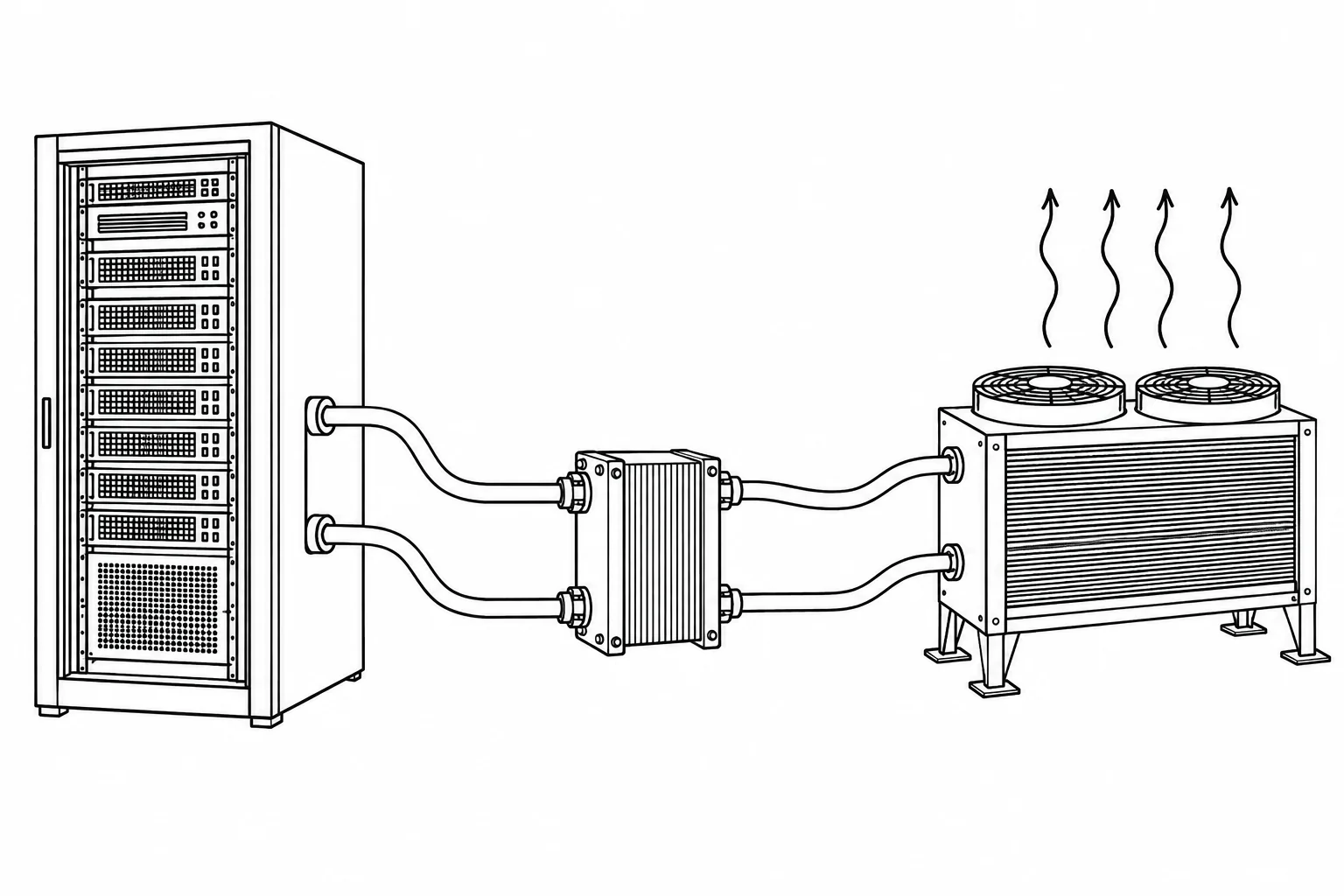
Microsoft has described a design that avoids evaporating water for cooling, with some additional electricity needed instead. That’s a useful option. It also shows why I’d rather see the actual design than stop at a “zero water” headline.
Location matters. Water consumed during a dry summer carries a different cost from water used where it’s plentiful. A town being asked to host a data centre deserves to know how it will be cooled through the hottest months, and what happens during a shortage.
What would make it worth it?
A researcher being able to run an experiment they couldn’t afford before is a reason to build. So is making a useful tool cheap enough for more people to use. Those are the gains I want from AI. A bigger cluster tells me very little about whether we’re getting them.
What bothers me is how easily someone else’s costs can disappear from that calculation. I might get a cheaper service while the town near the servers faces more pressure on its electricity and water. The people living there deserve a say in whether that trade is worth making.
We’re asking what humanity can afford, but we won’t all pay the same costs or receive the same benefits. A company’s ability to finance a data centre doesn’t settle what it asks of everyone around it. It should help pay for the infrastructure it needs and take responsibility if its plans fall through.
I want more people to have powerful tools. I think there are things worth spending far more compute on. But I can’t call the technology affordable just because the part of the bill I can see is small.
References and evidence
- IEA: electricity demand
- The April 2026 outlook estimates 485 TWh in 2025 and projects around 950 TWh in 2030 for all data centres. These are not AI-only totals.
- Choosing a model for the job · How agents use more computation
- Research on routing requests between models, and on agents spending additional effort on attempts, revision and verification. Neither predicts total electricity demand.
- How data-centre cooling works · Microsoft’s cooling design
- The NREL guide explains heat removal. Microsoft’s December 2024 announcement describes a design that avoids evaporation for cooling while using more electricity; it is not a claim about the water footprint of its entire fleet.
The efficiency example is illustrative arithmetic. The generated illustrations explain concepts; they contain no measured data.